How to react in case of flood (children)

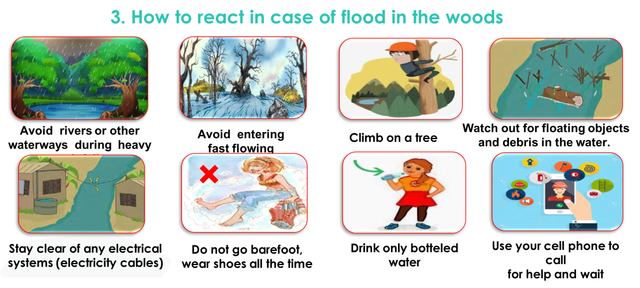
The lesson is regarding appropriate reaction in case of flood and self-protection in that kind of situation. We will separately discuss for self-protection at home, and we will explain instruction that person should follow when he/she can leave the home, and when they can’t leave the home. We will also discuss regarding self-protection at school, and separately instructions that persons should follow in a situation when they can leave the school, as well as the situation when they can’t leave the school. As third part, we will explain the instructions that children, youth and persons with disabilities should follow in a case of flood in woods. There are different directions that they need to respect depending on whether they can leave the place where they are, or they can’t leave the place.
Course Video
Course Content
How to react in case of flood
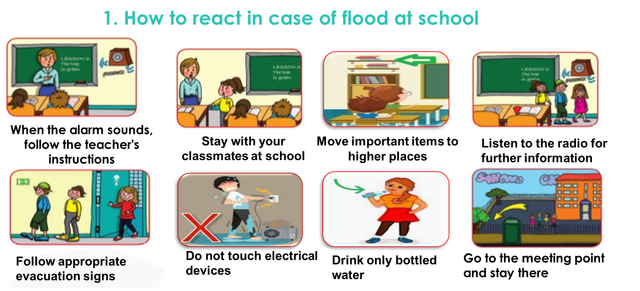
How to react in case of flood at school
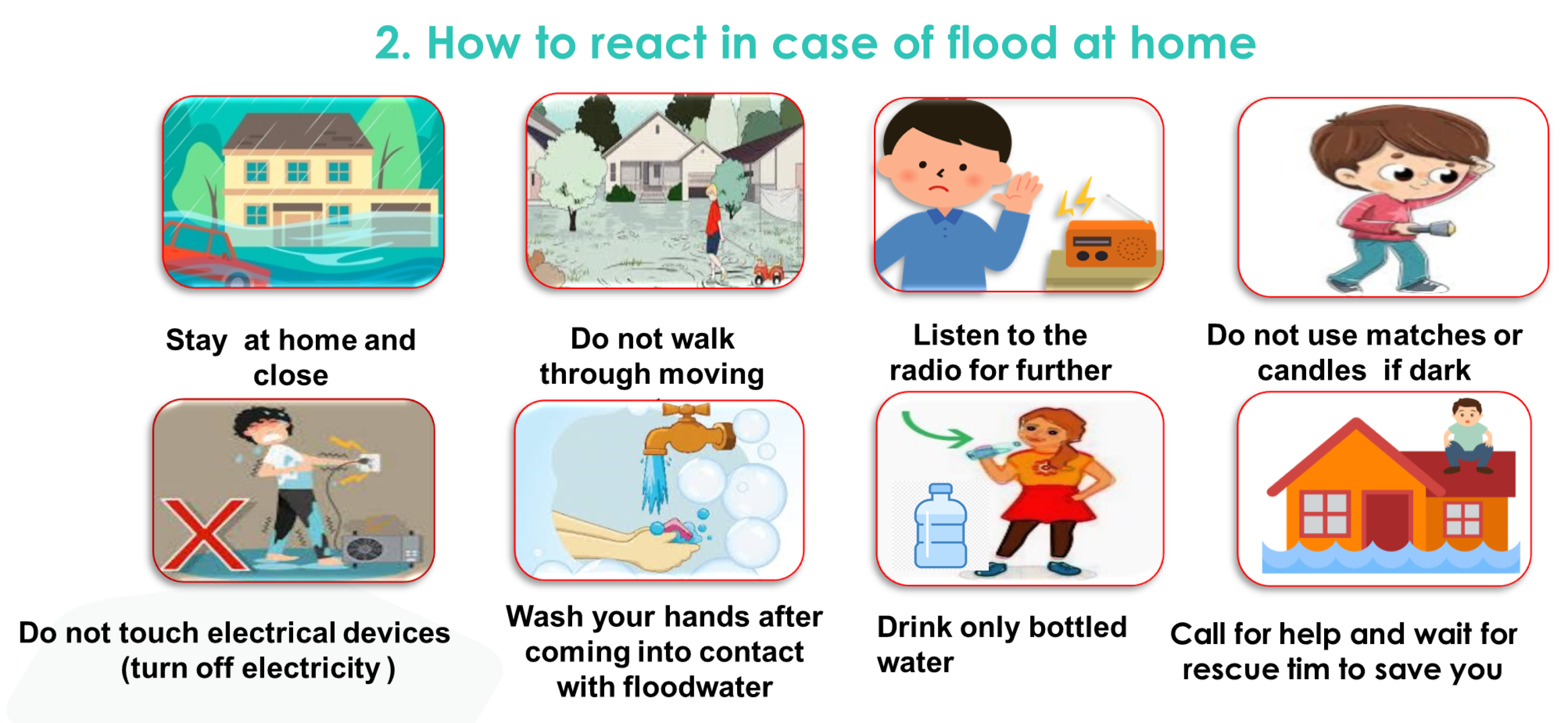
How to react in case of flood at home
How to react in case of flood in the woods
Check List
Check List
FLOOD SAFETY- FLOOD SAFETY -FLOOD SAFETY-FLOOD SAFETY-FLOOD SAFETY DO Listen the instructions from competent state and local institutions or your teacher; Follow appropriate evacuation signs; Lock all doors at home; Stay with your classmates at school; Move important items to higher places; Move/retreat to higher ground and avoid standing, flowing, or rising water; Move to the upper floors of the house/school main appliances and other important items; Listen to the radio for further information; Be informed on water supply and whether it is safe to drink the water; Secure your home (turn off electricity at the main switc, use battery light ; Wash your hands after coming into contact with floodwater. The water often sweeps up all sorts of debris, including sewage; Avoid entering fast flowing water because it can trap you and make it very difficult for you to escape; Beware of injuring yourself on dangerous objects, such as broken glass, or underwater debris; Мove slowly across the shallow water, using the stick for support; Help your teacher to evacuate students who have special needs, because they need extra help/assistance; Use only bottled water for drinking; Stay out of any building if it is surrounded by floodwaters; Use extreme caution when entering buildings; there may be hidden damage, particularly in foundations; If it’s dark, use a flashlight; Wash your skin if comes into contact with contaminated flood water with soap and uncontaminated water as soon as possible. DON’T DO Do not use electrical appliances before checking; Do not touch electrical devices when there is water around (avoid electricity sources); Do not use fresh water if it has come in contact with flood water; Do not walk through moving water and avoid the areas that are known to have landslides and rockfalls; Follow the indicated evacuation routes and do not use other shorter routes; Do not walk through fast-flowing water, even if it is only a few inches deep; If you are instructed to go to a specific location, go there and do not go anywhere else; Do not go barefoot, wear shoes all the time; Do not let someone drive through deep or fast-flowing water on a road; Do not stay near rivers or other waterways when there has been a heavy rainfall; Do not climb into a closed attic. You may become trapped by rising floodwater; Do not go out and walk through the road where the water is moving; Do not use matches, a candle or a lighter in a dark; Do not visit flooded areas; Do not panic, stay calm!