How to react in case of earthquake

This course will introduce children, young people and persons with disabilities with content related to earthquakes, preparedness for earthquakes, guidelines for earthquake safety, guidelines for children and guidelines for persons with disability. This content will elaborate on the safest ways of action before, during and after an earthquake.
Course Video
Course Content
Introduction
What are earthquakes?
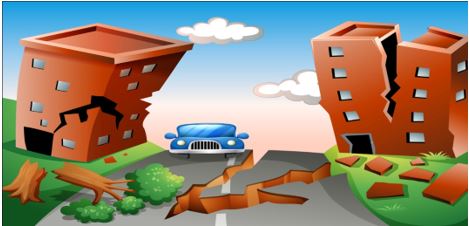
Earthquakes are the shaking, rolling or sudden shock of the earth’s surface. More than million earthquakes rattle the world each year. Earthquakes can be felt over large areas although they usually last less than one minute. Earthquakes cannot be predicted - although scientists are working on it! There are about 20 plates along the surface of the earth that move continuously and slowly past each other. As the plates move they put forces on themselves and each other. When the force is large enough, the crust is forced to break. When the break occurs, the stress is released as energy which moves through the Earth in the form of waves, which we feel and call an earthquake.
Interesting facts about earthquakes!
•80% of the world’s earthquakes happen in the Pacific Ocean near Japan in a place called the ‘Ring of Fire’. •Sadly about 10,000 people die in earthquakes each year. Most of the deaths are when people are trapped in falling buildings. •The largest earthquake ever recorded in the world was in Chile in 1960. It measured a 9.6 on the Richter Scale. •They can cause huge waves in the ocean called tsunamis. Earthquakes can happen in any kind of weather. •Alaska is the most seismically active state and has larger earthquakes than California.
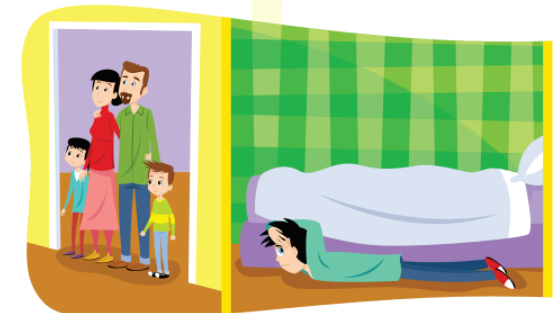

How to react in case of earthquake in home or school
Earthquake preparation (before, during and after)
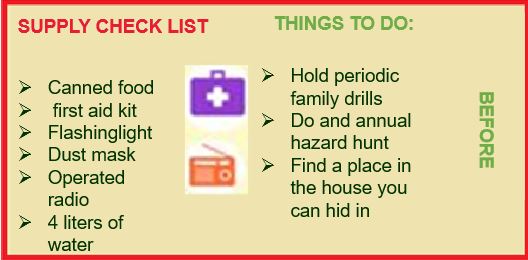
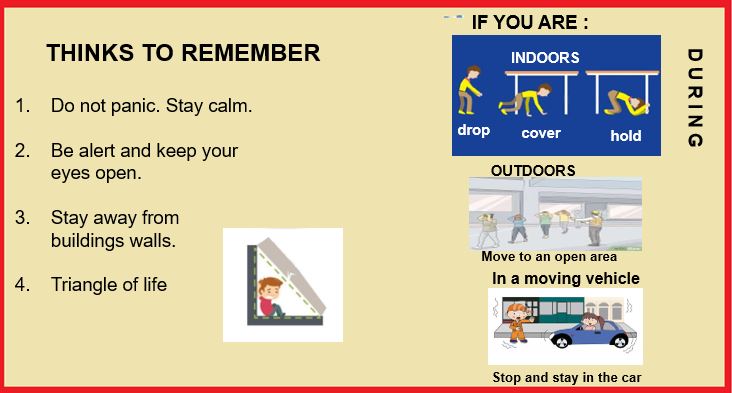
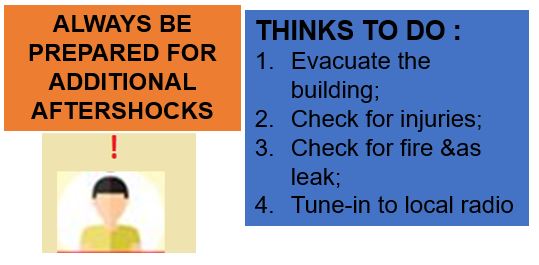
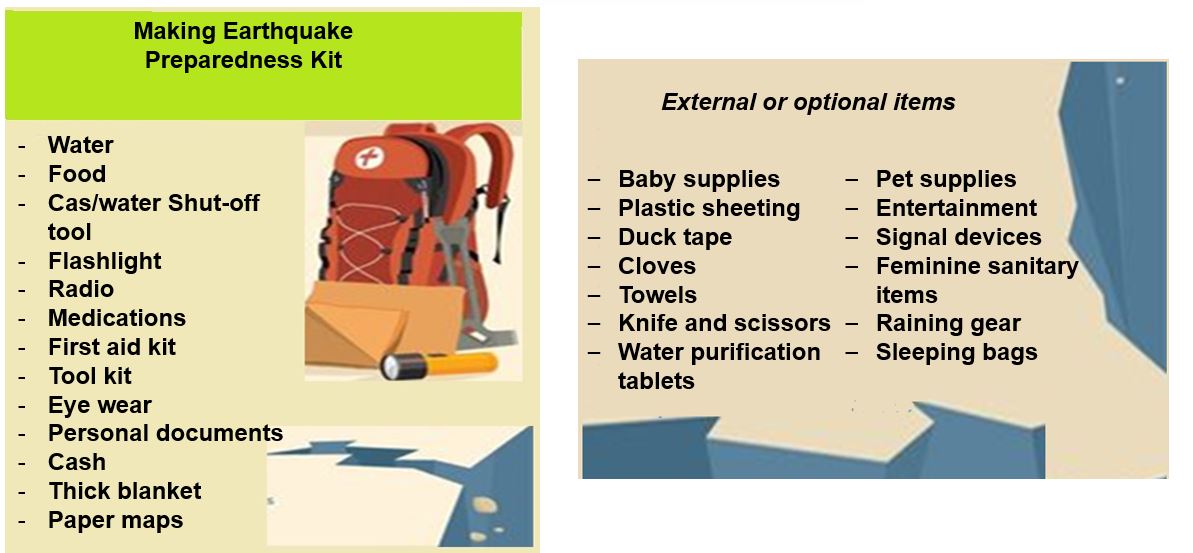
Earthquake preparedness kit
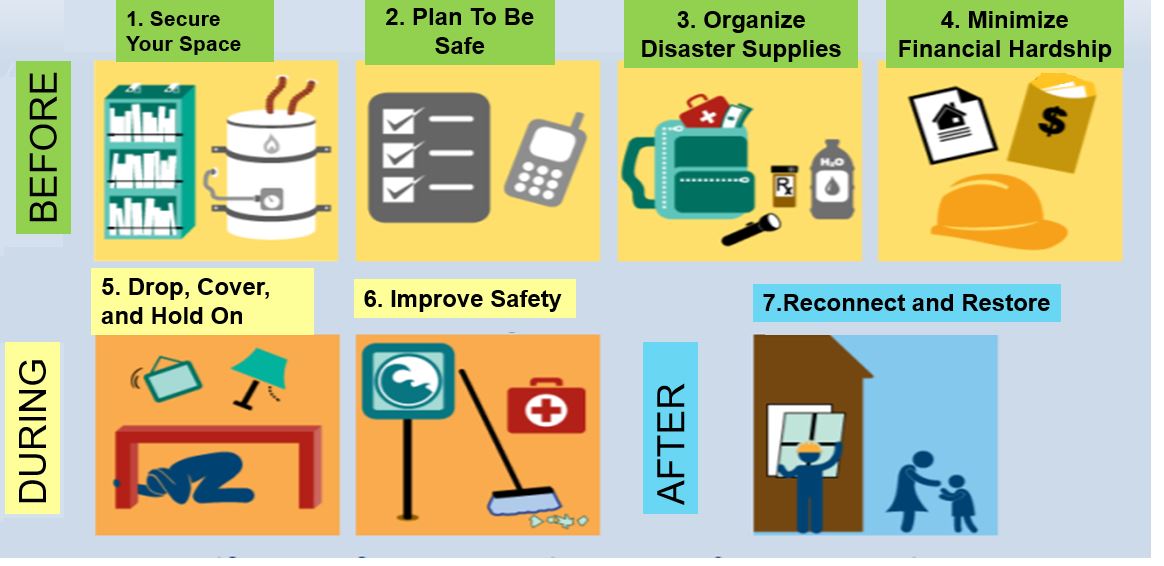
Seven steps to earthquake safety
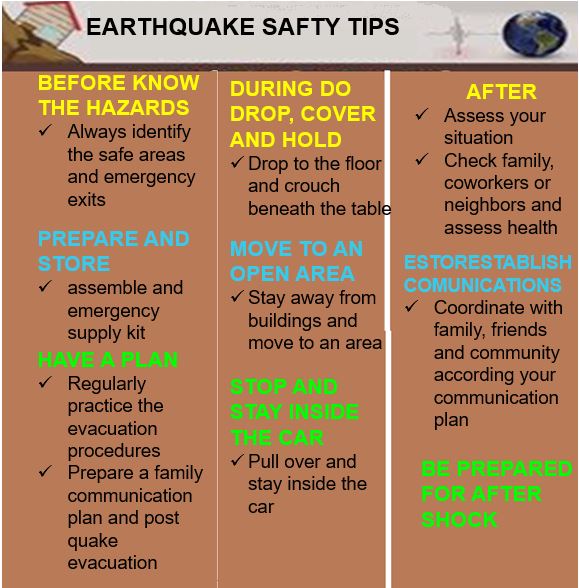
Earthquake safety tips
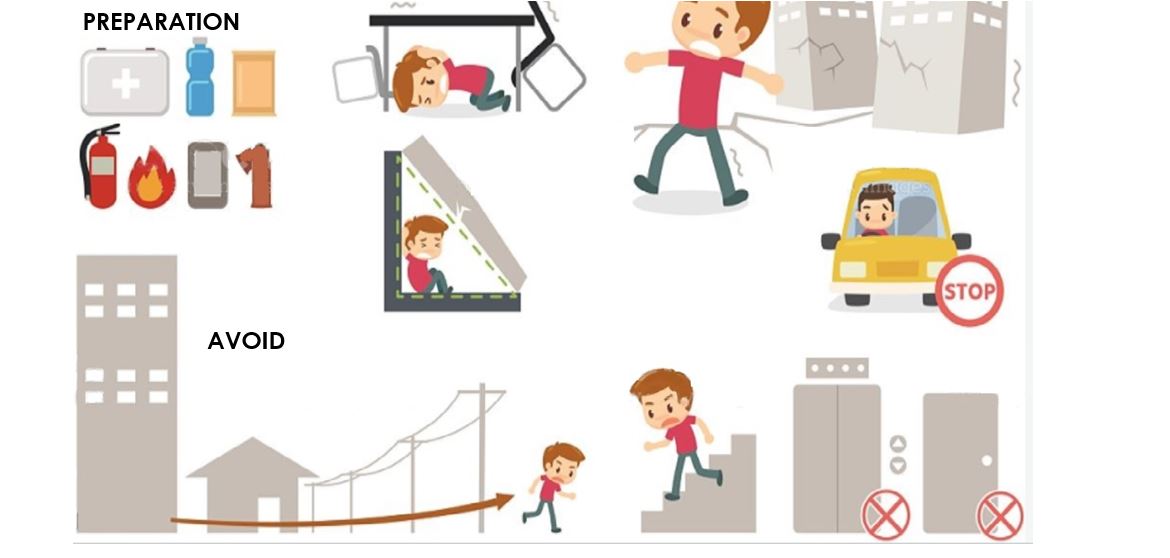
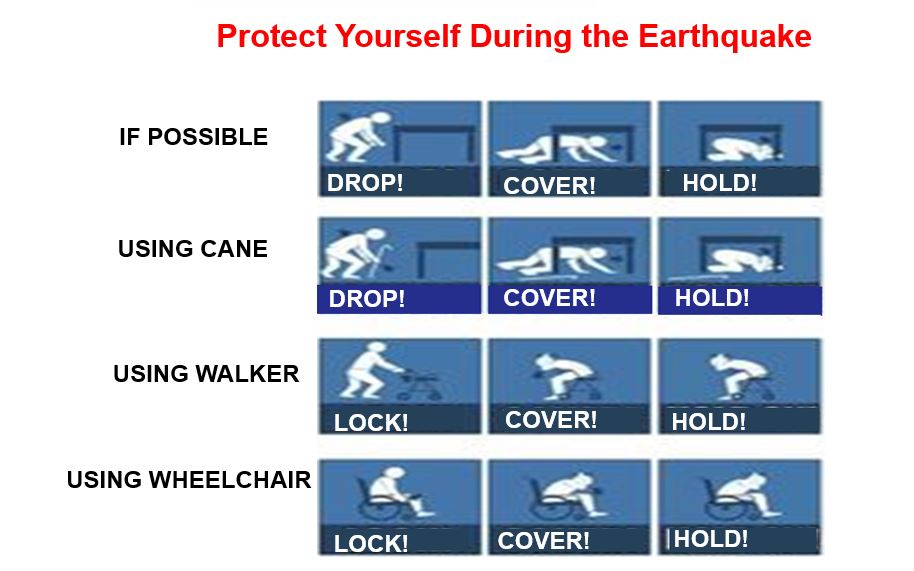
How to react during earthquakes
Earthquake preparations for children
Earthquake preparations for persons with special needs
Check List
Check List 1
Checklist 1. Have on Hand for Any Emergency Ideas for Home, Workplace, and Car Because you don’t know where you will be when an earthquake occurs, prepare a Disaster Supplies Kit for your home, workplace, and car. Fire extinguishers. Keep a fire extinguisher at home and in your car. Special needs. Keep a supply of special needs items, such as medications, extra eyeglasses, contact lens solutions, hearing aid batteries, items for infants (formula, diapers, bottles, and pacifiers), sanitation and hygiene items (moist towelettes and toilet paper), and any other items unique to your family’s needs. Prepare customized emergency plans for people with disabilities in advance. Tools. In addition to a pipe wrench and crescent/adjustable wrench (for turning off gas and water valves), you should have a lighter, a supply of matches in a waterproof container, and a whistle for signaling rescue workers. Important papers and cash. Be sure to have a supply of cash for use if ATMs, banks, and credit card systems are not operating. Clothes. Food. If you live in a cold climate, you must think about warmth because you might not have heat after an earthquake.Think about your clothing and bedding supplies. Pet needs. Identify a shelter area for your pet, gather the necessary supplies, ensure that your pet has proper ID and up-to-date veterinarian records. • Choose salt-free crackers, whole grain cereals, and canned goods with high liquid content. • Stock foods that do not require refrigeration, cooking, water, or special preparation. • Remember to include foods for infants and those with special dietary needs Flashlights and spare batteries. Keep a flashlight beside your bed, at your place of work, and in your car. Do not use matches or candles after an earthquake. Water. Store at least 4 liters of water per person per day and be prepared for at least a 72-hour period. A normally active person needs at least a ½ gallon of water daily just for drinking. Portable, battery-powered radio or television and spare batteries. First aid kit and manual.








Check List 2
Checklist2: When the Ground Stops Shaking Check closets and cupboards. Open doors cautiously. Beware of objects tumbling off shelves Check for Injuries. Check for fires, if possible, put out small fires. Check electrical power. If there is damage to your home’s electrical wiring, switch off electrical power. If the situation is unsafe, leave your home and seek help. Check the building for cracks and damage Particularly around chimneys and masonry walls. Check to see that water and sewage lines are intact before using the toilet. Plug bathtub and sink drains to prevent sewage backup.